

Scroll through your feed, and you might spot a post that grabs your attention right away. It claims a big event happened or shares shocking news. But is it real? In a world where anyone can post, lies spread fast—faster than facts. You need skills to spot them quick.
Think about how one fake story can trick thousands into bad choices. It might lead to lost money from scams or wrong health tips that harm people. Or it fuels fights over politics. This guide gives you “9 clear signs to check posts and stay safe“. You’ll learn to spot fakes in seconds.
Section 1: Analyzing the Source and Origin of the Post
Start by looking at who shared the post. The source tells a lot about truth. A quick check can save you time and worry.
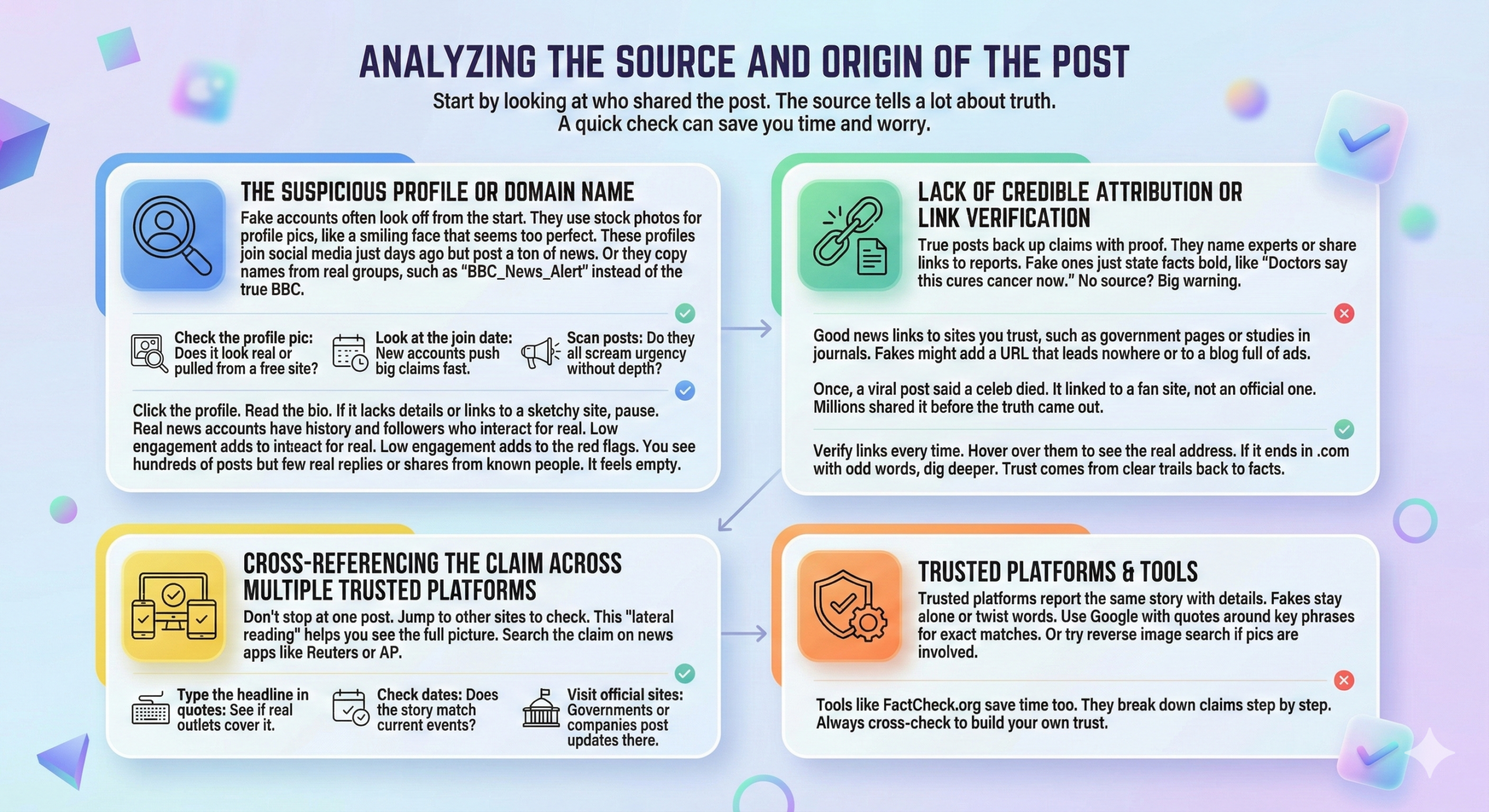
The Suspicious Profile or Domain Name
Fake accounts often look off from the start. They use stock photos for profile pics, like a smiling face that seems too perfect. These profiles join social media just days ago but post a ton of news. Or they copy names from real groups, such as “BBC_News_Alert” instead of the true BBC.
Low engagement adds to the red flags. You see hundreds of posts but few real replies or shares from known people. It feels empty.
- Check the profile pic: Does it look real or pulled from a free site?
- Look at the join date: New accounts push big claims fast.
- Scan posts: Do they all scream urgency without depth?
Click the profile. Read the bio. If it lacks details or links to a sketchy site, pause. Real news accounts have history and followers who interact for real.
Verify Profiles and Accounts
- Check the profile pic: Does it look real or pulled from a free site?
- Look at the join date: New accounts push big claims fast.
- Scan posts: Do they all scream urgency without depth?
Lack of Credible Attribution or Link Verification
True posts back up claims with proof. They name experts or share links to reports. Fake ones just state facts bold, like “Doctors say this cures cancer now.” No source? Big warning.
Good news links to sites you trust, such as government pages or studies in journals. Fakes might add a URL that leads nowhere or to a blog full of ads. Once, a viral post said a celeb died. It linked to a fan site, not an official one.
Millions shared it before the truth came out. Verify links every time. Hover over them to see the real address. If it ends in .com with odd words, dig deeper. Trust comes from clear trails back to facts.
Cross-Referencing the Claim Across Multiple Trusted Platforms
Don’t stop at one post. Jump to other sites to check. This “lateral reading” helps you see the full picture. Search the claim on news apps like Reuters or AP.
Trusted platforms report the same story with details. Fakes stay alone or twist words. Use Google with quotes around key phrases for exact matches. Or try reverse image search if pics are involved.
- Type the headline in quotes: See if real outlets cover it.
- Check dates: Does the story match current events?
- Visit official sites: Governments or companies post updates there.
Tools like FactCheck.org save time too. They break down claims step by step. Always cross-check to build your own trust.
Cross-Check Headlines and Stories
- Type the headline in quotes: See if real outlets cover it.
- Check dates: Does the story match current events?
- Visit official sites: Governments or companies post updates there.
Section 2: Scrutinizing Visual Evidence and Media Quality
Pics and videos pull you in strong. But they can lie easy. Look close at what you see.
Poor Image or Video Quality and Obvious Editing Marks
Blurry shots or shaky videos scream fake often. They reuse old clips with bad edits. Watch for lines around objects—that means Photoshop work. Pixels don’t match, or colors look wrong.
Low quality hides details on purpose. A video might claim a riot today, but zoom in shows summer trees from last year. Editing apps leave clues, like mismatched shadows.
Use tools to spot changes. Free AI detectors can flag deepfakes quick. They scan for odd patterns in faces or sounds.
- Reverse search images on Google: Find where it first appeared.
- Play videos slow: Look for cuts or loops.
- Check watermarks: Fake ones add phony logos.
These steps reveal tricks fast. Real media invests in clear shots.
Examine Images and Videos
- Reverse search images on Google: Find where it first appeared.
- Play videos slow: Look for cuts or loops.
- Check watermarks: Fake ones add phony logos.
Context Mismatch: Old Content Presented as Current Events
Clever fakes grab real clips and twist them. A photo from a 2010 flood shows up as today’s storm in another state. It fits the story but not the truth. This mix-up fools eyes quick. Spot it by dates or locations.
Background signs might say a different place. Videos from wars years ago claim fresh fights. One example: Images from Australian fires in 2020 popped up for California blazes in 2023. Shares exploded before checks caught on.
Ask: Does this match what I know? Search the image origin. Tools like TinEye trace back fast. Context matters—old news as new hurts trust.
The Use of Hyper-Emotional or Sensationalized Graphics
Graphics hit hard to stir feelings. Bright reds scream danger. Caps lock yells EVERY WORD. Charts show wild numbers without sources. They aim to shock, not inform.
Real info uses calm colors and facts. Fakes push rage with words like “shocking” or “you won’t believe.” It skips calm talk for heart-pounds.
Pause at strong pulls. Why does this graphic make you mad right away? Step back. Check if it cites data from real places. Emotion clouds judgment every time.
Section 3 :Examining the Language and Tone of the Content
Words shape belief. Fake posts use tricks to hook you. Read between lines.
Overwhelming Emotional Language and Appeals to Bias
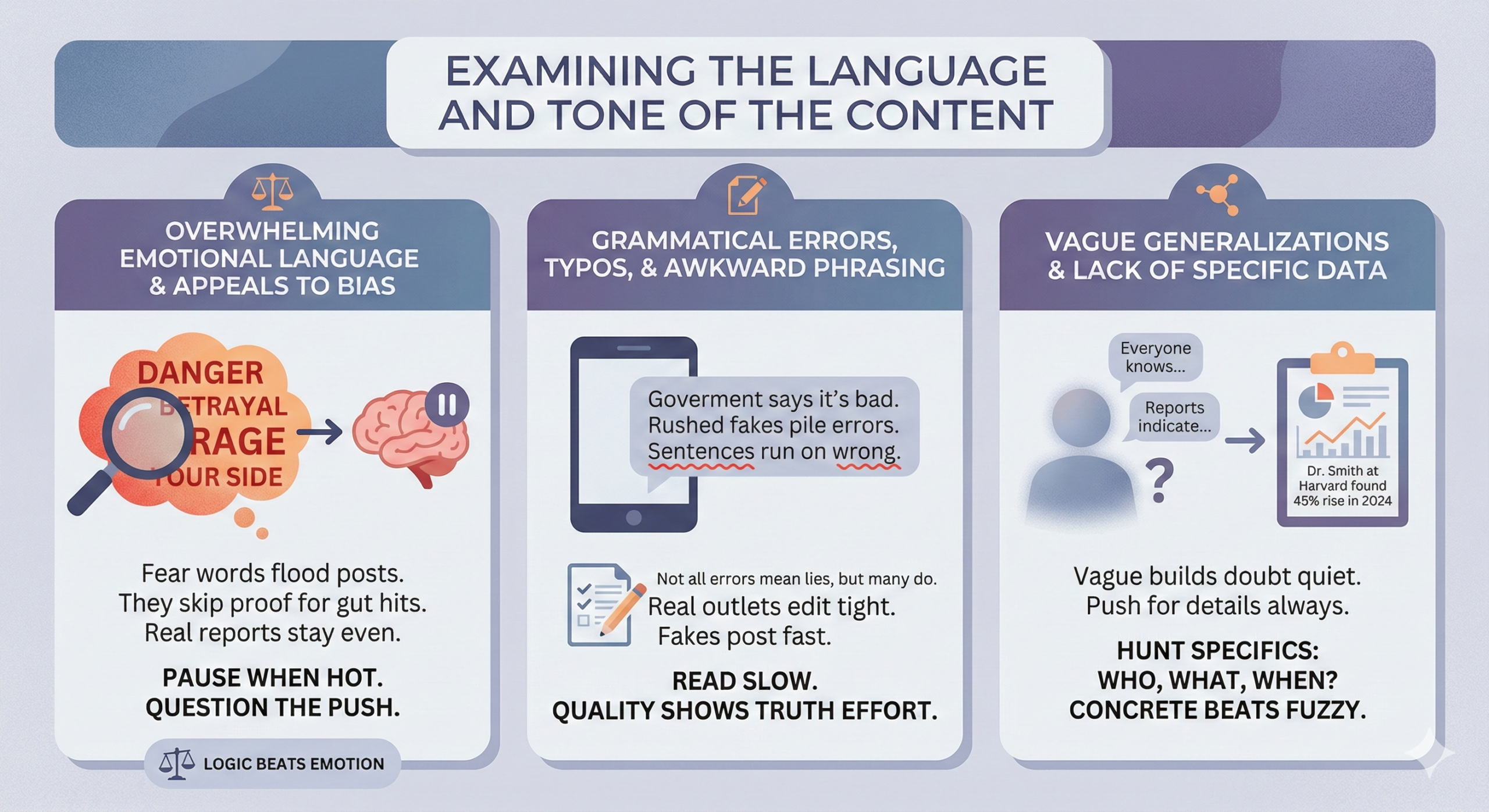
Fear words like “danger” or “betrayal” flood fake posts. They tap your views, saying “your side wins big.” It skips proof for gut hits. Real reports stay even, like “experts note this trend.”
This pull makes you share without think. Why rage now? The writer picks words to skip your brain.
- Spot triggers: Anger, fear, or pride words stand out.
- Ask yourself: Does this match calm facts I know?
- Compare tones: True news reports, fakes rant.
Pause when hot. Question the push. Logic beats emotion.
Analyze Emotional Triggers
- Spot triggers: Anger, fear, or pride words stand out.
- Ask yourself: Does this match calm facts I know?
- Compare tones: True news reports, fakes rant.
Grammatical Errors, Typos, and Awkward Phrasing
Errors pile up in rushed fakes. Sentences run on wrong. Typos like “goverment” instead of government flag low care. Or bad translations from other languages sound off.
Not all errors mean lies, but many do. Real outlets edit tight. Fakes post fast to spread.Read slow. Does it flow natural? Fix small slips in your mind— if too many, doubt it. Quality shows truth effort.
Vague Generalizations and Lack of Specific Data
Phrases like “everyone knows” or “reports indicate” hide voids. No names, dates, or numbers? It’s fluff. True posts say “Dr. Smith at Harvard found 45% rise in 2024.”
Vague builds doubt quiet. It sounds sure but proves nothing. Push for details always.
- Hunt specifics: Who, what, when?
- No stats? Search them yourself.
- “Sources close” often means none.
Concrete beats fuzzy every day.
Check Facts and Sources
Lorem ipsum dolor sit amet, consectetur adipiscing elit. Ut elit tellus, luctus nec ullamcorper mattis, pulvinar dapibus leo.
Section 4: Assessing the Engagement Patterns and Distribution Velocity
How a post spreads says much. Watch the crowd reaction.
Unnaturally High Engagement Velocity and Bot-Like Comment Patterns
Likes jump thousands in minutes? Bots at work. Comments repeat “wow” or short spam. Real buzz grows slow with real thoughts.
Studies show bots make up 15% of traffic on big sites. They boost fakes to look true. Check timestamps— all at once screams fake.
- Scan comments: Varied or copy-paste?
- Watch likes: Steady rise or spike?
- Tools spot bots: Look for patterns in accounts.
Organic feels human, slow, and mixed.
Inspect Engagement Metrics
- Scan comments: Varied or copy-paste?
- Watch likes: Steady rise or spike?
- Tools spot bots: Look for patterns in accounts.
Appeals to Share Immediately ("Share Before It's Taken Down!")
Urgency tricks you. “Act now or lose this!” pushes blind shares. It skips checks for speed. Real news lets you think. This tactic fights platforms’ rules. Share fear spreads it wide. Stop at calls to act fast. Why rush? Verify first. Your share counts double—make it true.
The Post Ignores or Deletes Counter-Evidence
Fakes block facts. Comments with proof vanish. Owners mute doubters. True pages welcome debate and fix errors. Watch replies. If only yes-men talk, it’s rigged. Real talk flows open. Report blocks if you see them. Seek full views elsewhere. Open doors build trust.
Conclusion
You now know nine signs a social media post is not true. First, check sources for fakes like odd profiles or no links. Cross-verify on trusted sites. Next, eye media for bad quality, wrong context, or emotional grabs. Language flags come from heavy feels, errors, or vague talk. Last, watch shares for bot spikes, rush pleas, or silenced facts. Critical thinking beats lies best. Pause, verify, then share. Practice these steps daily. You’ll spot truth easier and help others too. Stay smart online—your feed thanks you.
FAQ (Frequently Asked Question)
Likes and followers look impressive but don’t always reflect real business impact. They fail to show whether users trust your brand, visit your website, or make purchases. Metrics tied to engagement, conversions, and retention provide a clearer picture of success.
For most small businesses, conversion rate is the most important metric. It directly connects social media activity to sign-ups, leads, or sales, helping you understand whether your efforts generate real revenue.
You should review key metrics weekly to spot trends early and monthly to evaluate strategy changes. Daily tracking can help with paid ads and customer support response times, but long-term patterns matter more than daily spikes.
Popular tools include Google Analytics, Meta Business Suite, LinkedIn Analytics, and social management platforms like Hootsuite or Sprout Social. These tools help track engagement, conversions, traffic quality, and response times in one place.
Focus on content that encourages meaningful actions such as saves, shares, and comments. How-to guides, quick tips, polls, and relatable stories often perform better than promotional posts and naturally boost engagement.
Yes. Fast responses and issue resolution through social media build trust and loyalty. Metrics like response time, resolution rate, and support deflection show how social channels reduce costs while improving customer satisfaction.