
For many people asks, In 2026 OK.ru isn’t a “new” app you try. It’s the place you return to when you want to find a former classmate, check in on family, or follow what’s happening in your city or village. It works a bit like a familiar neighborhood courtyard: you may not talk to everyone every day, but you know where to go when you need people.
A lot of users still ask, “Why is OK.ru popular in Russia and Eastern Europe 2026?” The answer isn’t hype or a single feature. It’s a set of practical habits and social ties that keep the platform useful even when other apps come and go.
The 7 practical reasons OK.ru stays big in 2026
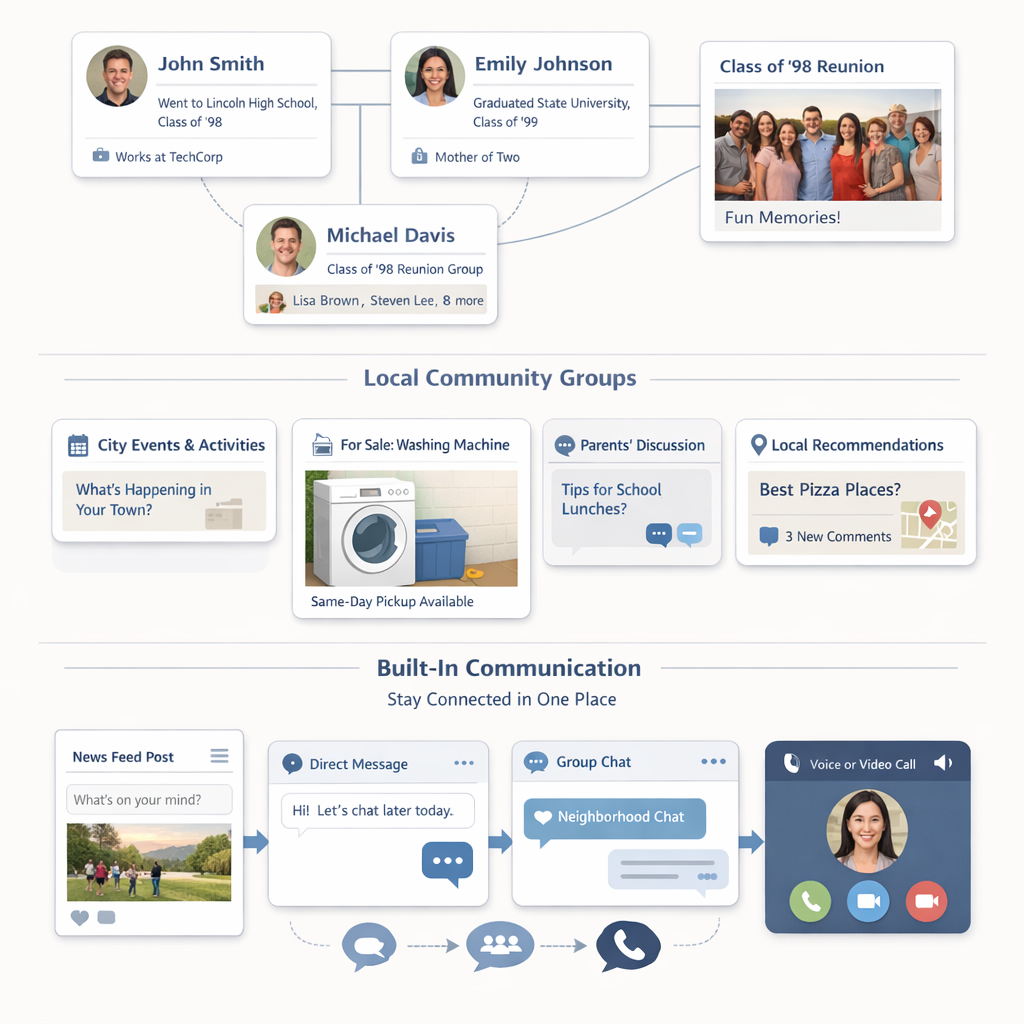
Reason 1 - 3 :Familiar social circles, strong group culture, and easy communication tools
Real identity and long-term ties feel “native” here.
OK.ru began with the idea of reconnecting classmates, and that DNA still shapes how people use it. Many profiles are anchored in real names, schools, workplaces, and family networks. That raises the odds that “someone you know” is actually the person you remember, not a random account with a similar name.
A normal benefit is simple: You can rebuild weak ties without awkwardness. For example, a former classmate sets up a reunion thread, people recognize surnames and school years, and suddenly the group has photos, dates, and shared memories that don’t need extra explanation.
Groups support local life, not just fandoms
OK.ru groups often function like community bulletin boards. People join groups tied to cities, schools, apartment buildings, parent circles, hobby clubs, and local help. The value comes from the mix of familiarity and proximity. If you need a recommendation for a repair person, a used stroller, or a kindergarten tip, a local group can respond faster than a broad social feed.
A clear example is a neighborhood buy-sell group. Someone posts a washing machine for pickup today, neighbors reply, and the transaction happens with less friction because users share mutual contacts and local context.
Built-in communication reduces “app hopping”
Many platforms offer messaging, but OK.ru users often stay because communication tools sit next to daily browsing. Messages, calls, and group discussions live in the same routine as photos and updates. For some families, that matters more than flashy design. People don’t want to juggle three apps just to say “Happy birthday” and then set up a quick chat.
A common use case is a family call with relatives in different cities. One person starts a call from the same account they use to read posts, and it’s done. Less switching means fewer missed messages and fewer “Where should I write you?” moments.
Reason 4 to 7:In 2026 Ok.ru How performs in Entertainment features, discovery, habits, and regional relevance
4. Entertainment sits in one place (music and video included)
OK.ru in 2026 is not only for updates. Many users treat it like a combined social feed and media shelf. The platform supports music sharing and video viewing alongside normal posting, which makes it easier to fill short breaks. Instead of leaving to search elsewhere, people can listen, watch, react, and send a link to friends in the same flow.
If you want a quick sense of the app’s feature set across devices, this iPhone app overview of Odnoklassniki summarizes core areas such as groups and music. The practical benefit is not novelty, it’s convenience: entertainment and social context stay connected.
Livestreaming makes “being there” simpler
Livestreams lower the barrier between creators and everyday users. You don’t need professional editing to share a live moment, and viewers don’t need to learn a separate platform. That matters for small events that still feel important: a local concert, a school performance, a craft demo, or a holiday gathering.
For users, the benefit is time and clarity. A friend can stream a town celebration, and you can watch, comment, and send it to others without downloading another app or chasing a link that breaks.

Low-effort daily use comes from learned routines
People stay where they have habits. OK.ru’s structure is familiar to long-time users, including those who prefer straightforward menus and predictable posting patterns. That “known interface” effect can sound minor, but it shapes daily behavior. When an app feels like rearranged furniture, people use it less. When it feels stable, they keep returning.
A simple example is the morning check-in. Users scroll updates, react to photos, glance at group posts, and answer a message. The routine is almost automatic, like reading the same newspaper section every day.
Regional fit keeps topics, language, and norms close to home
OK.ru stays relevant because it reflects regional languages, humor, and social norms across Russia and nearby countries. That affects everything from group topics to how people present themselves online. For many users, the platform feels less like a global stage and more like a community space where everyday life is understood without translation.
There’s also a harder, neutral point about reach: platforms with strong regional presence can attract attention from political marketers and influence campaigns, because that’s where audiences are. The existence of that attention does not prove anything about individual users, but it does signal that the platform remains a meaningful channel for information and conversation.
For background on the service’s history and positioning, see the reference entry on Odnoklassniki.
How to get more value from OK.ru without sharing too much
In 2026 OK.ru works best when you control your boundaries. Start with a short privacy reset, then keep it steady.
Review your profile visibility and limit what strangers can see. If your city, birthday, or contact info doesn’t help friends, consider hiding it. Next, adjust who can message, comment, or call you.
Many people prefer “friends only” for messages, then they open exceptions case by case. Be cautious with location, workplace, and school details. Those fields can make reconnections easier, but they also make it easier for others to map your life. If you keep them visible, keep them broad (city rather than a full address or exact department).
Finally, audit the groups you joined. Leave groups that no longer match your interests, and watch groups that post too much personal data in public threads. A cleaner group list often leads to a calmer feed and fewer unwanted interactions.
Conclusion
OK.ru stays large in 2026 for reasons that are simple to explain and hard to copy: durable relationships, familiar routines, and tools that cover both communication and entertainment in one place. When classmates, families, and local groups already live on the same platform, switching costs feel real, even without dramatic new features. If you want the best experience, keep your circle clear and your settings intentional, then enjoy the social side without oversharing. Which feature keeps you on OK.ru most, calls, groups, music, or livestreams?
FAQ
OK.ru remains popular because it supports long-standing social connections, local groups, and everyday communication in one place. Many users rely on it to stay in touch with classmates, relatives, and neighbors rather than to follow trends or influencers.
While the platform has a strong base of long-time users, it is not limited to older audiences. Families, parents, and local communities of mixed ages use OK.ru for group discussions, media sharing, and routine communication tied to real-world relationships.
OK.ru focuses more on real identities, regional relevance, and local group activity than on viral content or global discovery. For many users, it functions more like a community space than a broadcast platform.
Yes. Alongside social updates, OK.ru includes music, video, and livestreaming features. These tools are integrated into the same interface, allowing users to switch between communication and entertainment without leaving the platform.
OK.ru provides privacy controls that allow users to limit profile visibility, messaging access, and group participation. The platform works best when users review settings regularly and avoid oversharing detailed personal information.
Many users stay because their social circles, habits, and local groups are already established on the platform. When communication, entertainment, and community all exist in one place, the incentive to move elsewhere is lower.